
What is Midori (Matcha) Leather?
Muso GoodsWhat exactly is Midori leather?
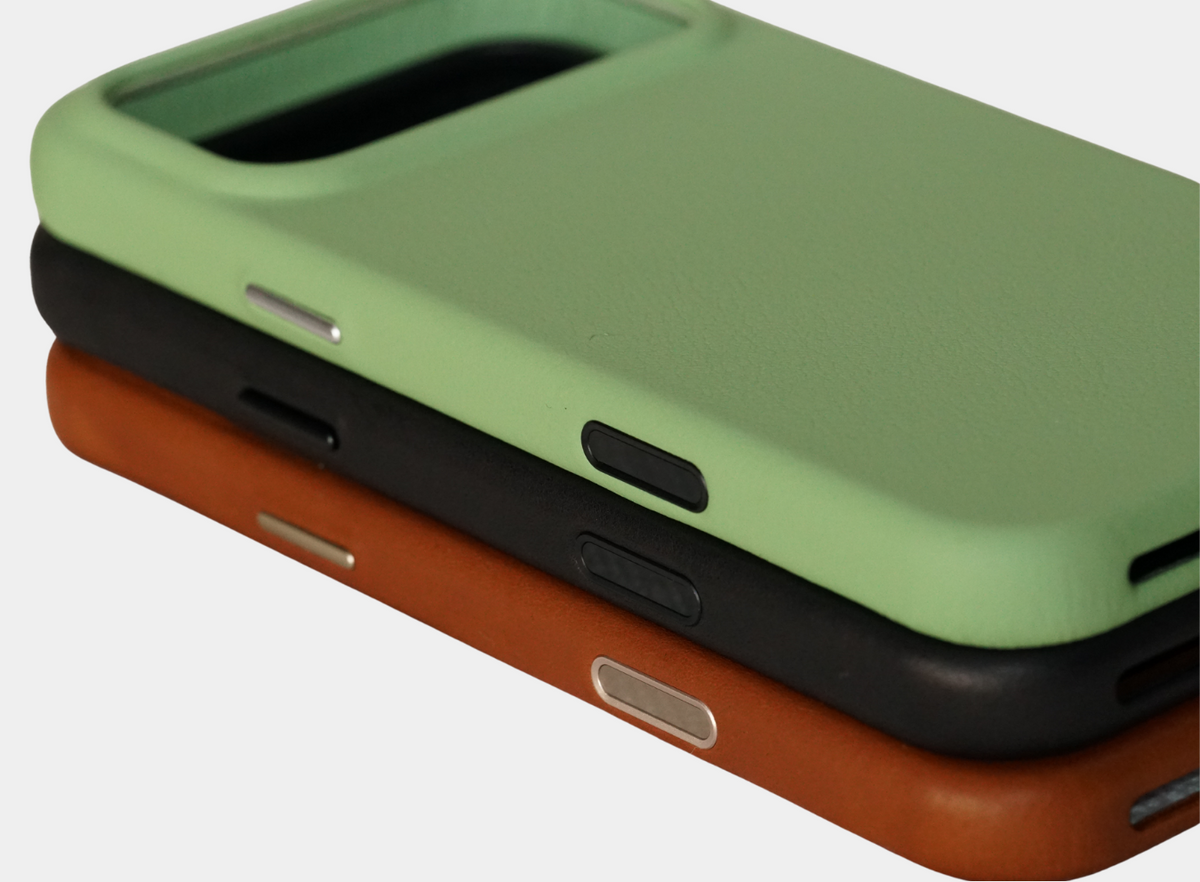
Midori is the Japanese word for green. It is also the name we gave to the second leather in the MUSO collection: a soft, full-grain cowhide, tanned in Japan, that gets its colour and part of its character from an unlikely source, the leftovers of matcha production in Uji, Kyoto.
Where Barenia is a French leather first made for equestrian saddles, Midori is new. It was developed in Japan in the last few years, and in 2025 it was named Best Sustainable Leather at the Asia Pacific Leather Fair in Hong Kong. This is the story of how a tea byproduct ended up in a phone case.

The Story Behind Matcha Leather
Midori is made by Robicoco, a Japanese leather company founded in February 2024 by Masaaki Morita, who previously spent 21 years at one of Japan's large leather wholesalers. Robicoco works with a network of tanneries and finishing plants in Japan and abroad, and specialises in what it calls upcycled leather.
The idea behind that word is simple. Leather itself is a byproduct: the hides come from animals raised for food, and Robicoco argues they should be turned into something lasting rather than thrown away. Morita wanted to go one step further and give a second life to waste from the food industry too. Visiting production sites, he noticed that tea and coffee are rich in tannins, the same family of compounds tanners have used to turn hide into leather for centuries.
That observation became two materials: a coffee leather made with defective roasted beans, and the matcha leather we use for Midori.
From Tea House to Tannery
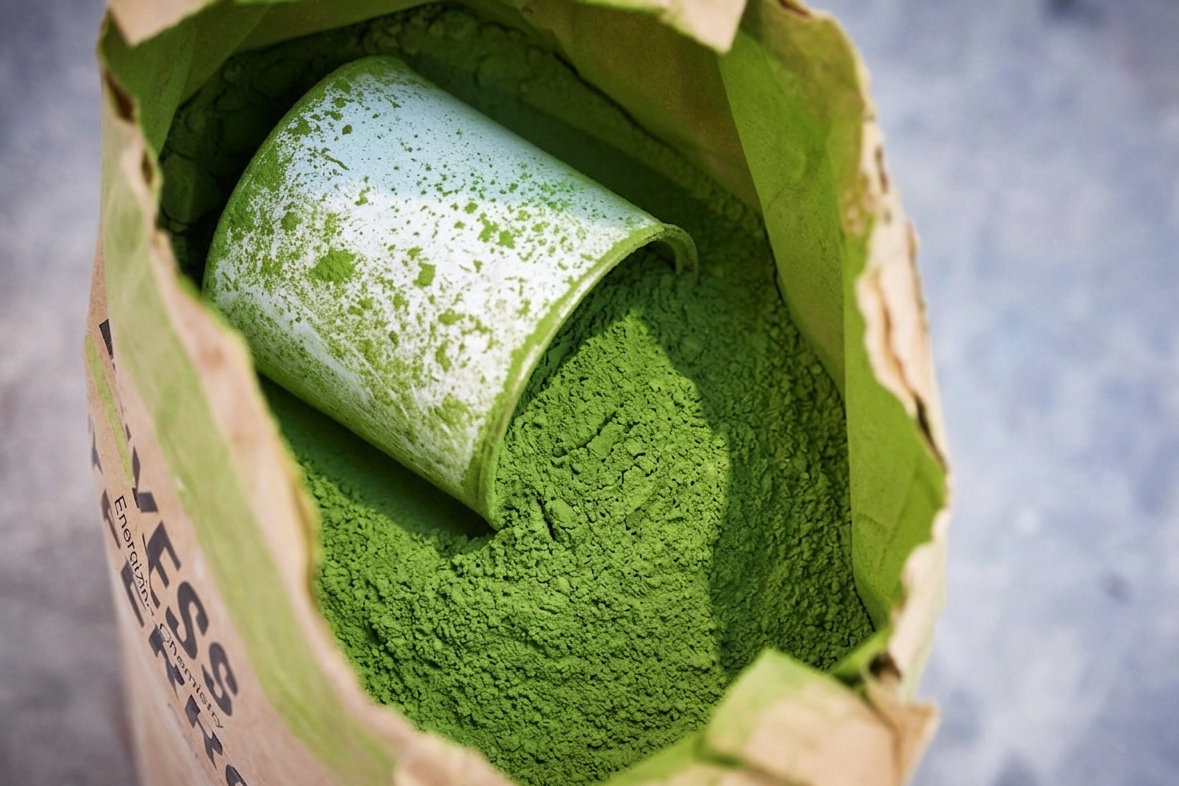
The Residue: What Matcha Leaves Behind
The tea comes from Morihan, a tea house in Uji, Kyoto, founded in 1836 and operated today by Kyoei Seicha. Uji has been the heart of Japanese tea for centuries; its growers were cultivating shaded tea by the early 1400s, and in the Edo period the region's tea masters supplied the shogunate.
Matcha is made from shade-grown leaves that are steamed, dried and slowly stone-ground into powder. Like any production process, it leaves residue behind: material that will never be sold as tea. Robicoco takes that residue from Morihan and puts it to work.
Tanning and Dyeing with Tea
The matcha residue is used at two stages. First in tanning, alongside a mineral (chrome) tannage, the step that turns raw hide into stable leather. Then again in dyeing, where it contributes to the leather's soft green colour. According to Robicoco, the tea gives the finished hide a plump, soft hand and gentle tones you would not get from dye alone.
Chrome tanning is the reason Midori feels so supple from the very first day. Mineral tanning agents penetrate the hide finely and produce a thinner, softer leather that is less prone to water marks than heavier vegetable-tanned leathers.
The Semi-Aniline Finish
Midori is finished as a semi-aniline leather. The grain is dyed through, then sealed with only a very thin coating, so the natural texture of the cowhide still shows while the colour stays even and better resists fading in sunlight. The matcha is not part of this top layer; it lives in the leather itself.
| Stage | What happens | Why it matters |
|---|---|---|
| Hide | Full-grain cowhide, a byproduct of the food industry | Keeps the strongest, most natural layer of the skin |
| Tanning | Mineral (chrome) tannage with matcha residue from Morihan | A stable, soft, plump leather that gives a second life to tea waste |
| Dyeing | Matcha residue combined with dyes | The soft green tone that gives Midori its name |
| Finish | Thin semi-aniline coating | Natural grain on show, even colour, easier everyday care |
Recognised at APLF 2025
In March 2025, Robicoco's matcha leather won Best Sustainable Leather at the Best of APLF Awards in Hong Kong, the annual prize of the Asia Pacific Leather Fair. The judges highlighted the use of matcha and the reuse of byproducts from shade-grown tea leaves. It was the only winner in the sustainability category, and, by Robicoco's account, the first time a leather wholesaler had received the award.
Midori versus Barenia
Our two leathers are made for the same purpose, a case that ages rather than wears out, but they get there in very different ways.
| Midori | Barenia | |
|---|---|---|
| Origin | Japan (Robicoco, with matcha residue from Uji, Kyoto) | France (Tanneries Haas, Alsace) |
| Tanning | Mineral (chrome) tanning with matcha residue | Chrome tanning, then vegetable retanning with oak and birch bark |
| Finish | Semi-aniline: thin protective coating | Open surface: no pigment, no sealant |
| Feel | Soft, plump, nappa-like from day one | Firmer, smooth, softens with use |
| Patina | Gentle and gradual, colour stays even | Pronounced: darkens and gains a glossy glaze |
| Best for | Those who want colour and softness with a quiet evolution | Those who want a dramatic, personal patina |
How Midori Ages
Because it is chrome-tanned and finished with a thin protective layer, Midori changes slowly. Over months of use, it softens further, its surface takes on a gentle sheen where your hand rests, and its green may deepen slightly. It will never transform as dramatically as Barenia, and that is by design: Midori keeps its colour and character while still becoming unmistakably yours.
How to Care for Midori
-
Daily Care
Wipe the case with a dry, soft, lint-free cloth to remove dust and oils from the surface. -
Conditioning
Midori needs very little. A light, solvent-free leather protection cream every few months helps maintain the finish. Always test on a hidden spot first. -
Liquid Exposure
Blot spills straight away with a dry cloth and let the case air-dry at room temperature, away from radiators, hair dryers and direct heat.
MUSO's Midori Collection
We chose Midori because it says something Barenia cannot: that a beautiful leather can also be a thoughtful one. Every MUSO Midori case is full-wrap, MagSafe-ready and free of external branding, so the leather is the only thing you notice.

Explore the Midori leather iPhone cases